

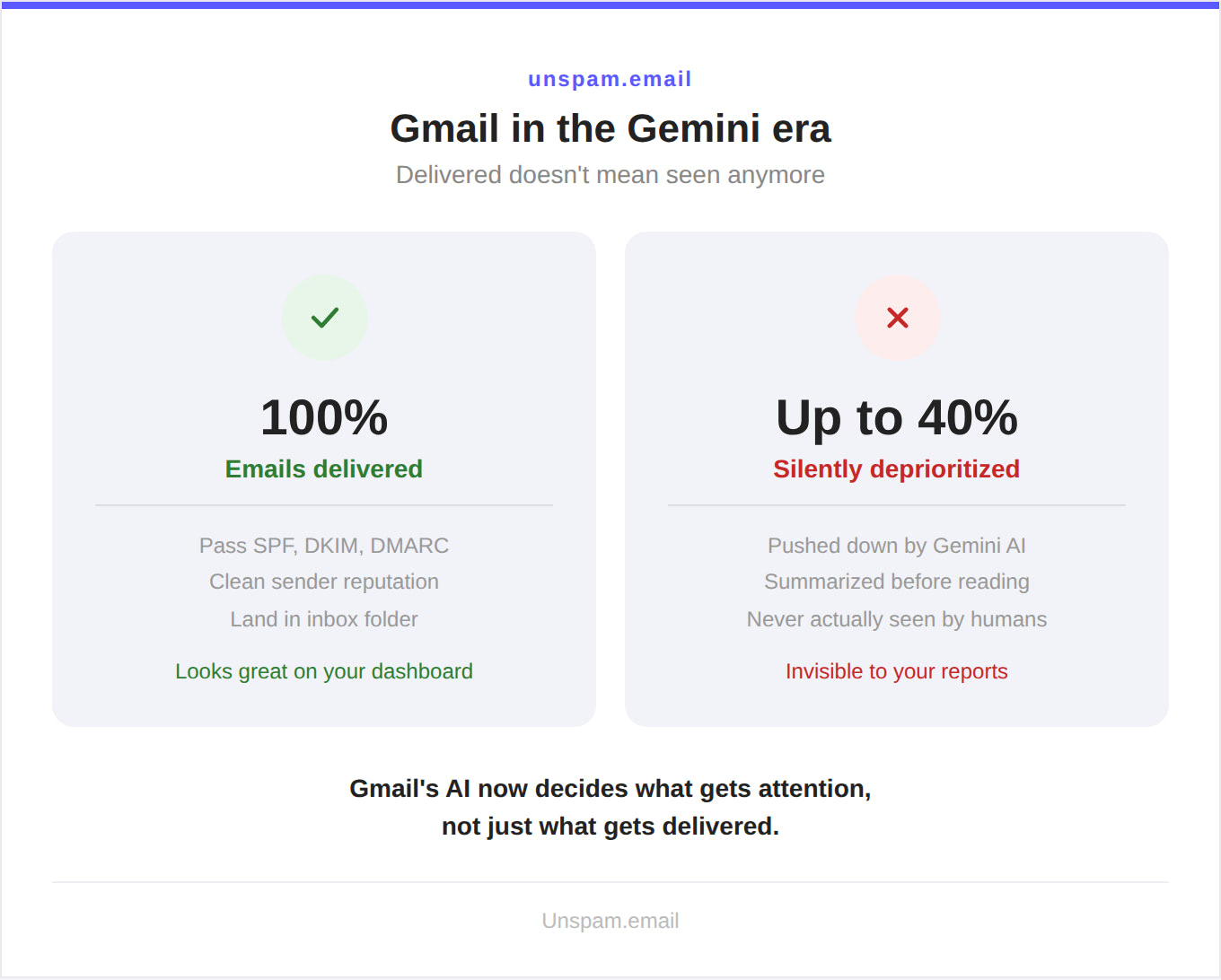
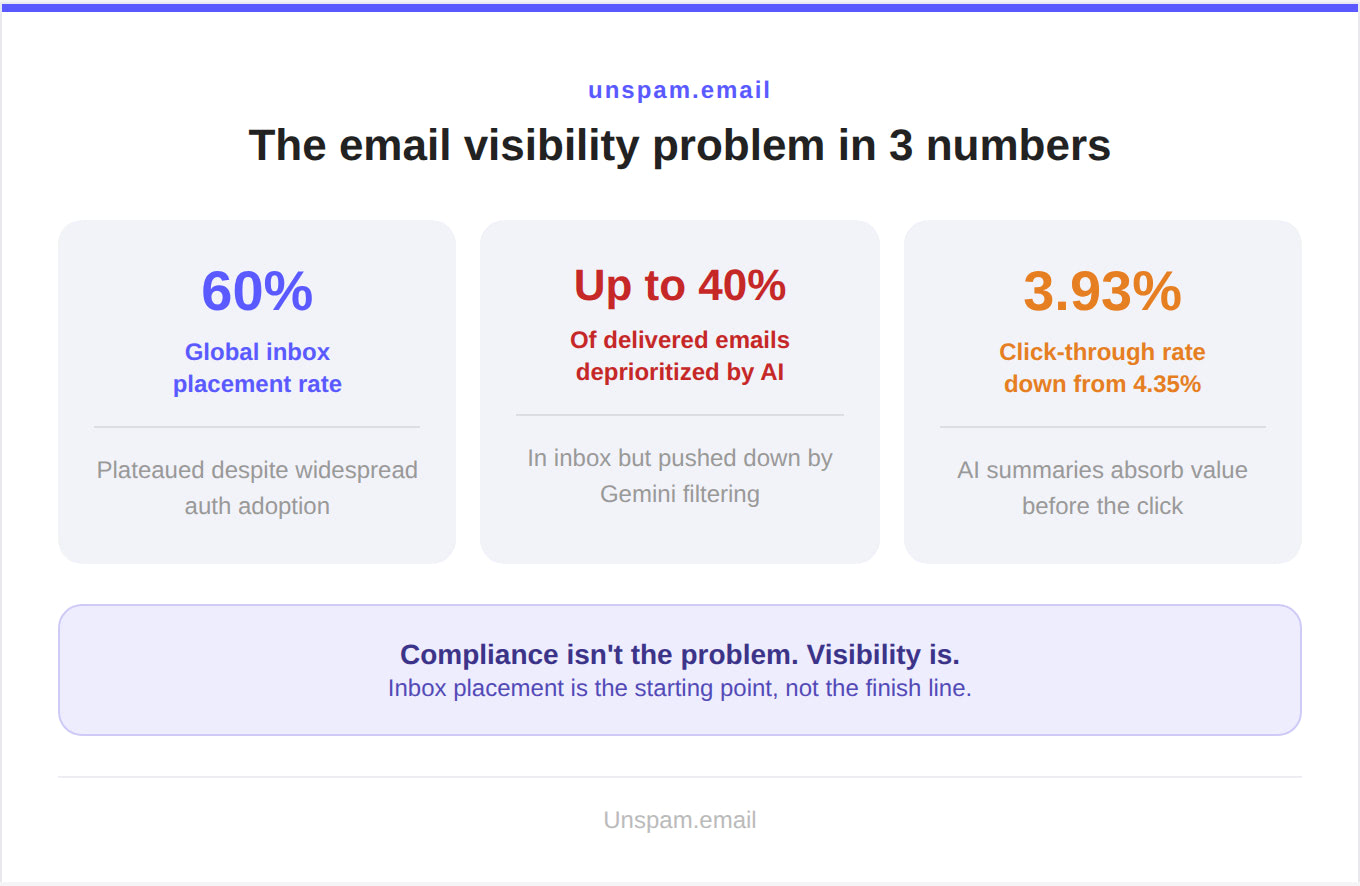
Gemini, Google’s AI platform, now supports Gmail, and some research suggests that even when emails make it to the Gmail inbox, up to 40% may still be quietly pushed down or deprioritized by Gemini’s filtering skills.
Google made this shift official on January 8, 2026, when it announced that Gmail was entering the Gemini era. This development in Gmail means a clean sender reputation and a passing spam check are no longer enough to guarantee your message gets real attention.
Today, we’ll break down what that announcement actually changed inside the inbox, why those changes are reshaping how Gmail evaluates senders and surfaces messages, and how teams can use tools like Unspam.email to measure what is really happening to their campaigns, not just what the dashboard reports suggest.
After reading this article, you’ll be able to start understanding exactly what Gmail’s AI now controls, and why that changes the deliverability conversation entirely.
What Google’s Gemini Rollout Changed Inside Gmail
On January 8, 2026, Google announced that “Gmail is entering the Gemini era” and for email senders, that announcement marked a genuine platform-level shift, not a minor interface update.
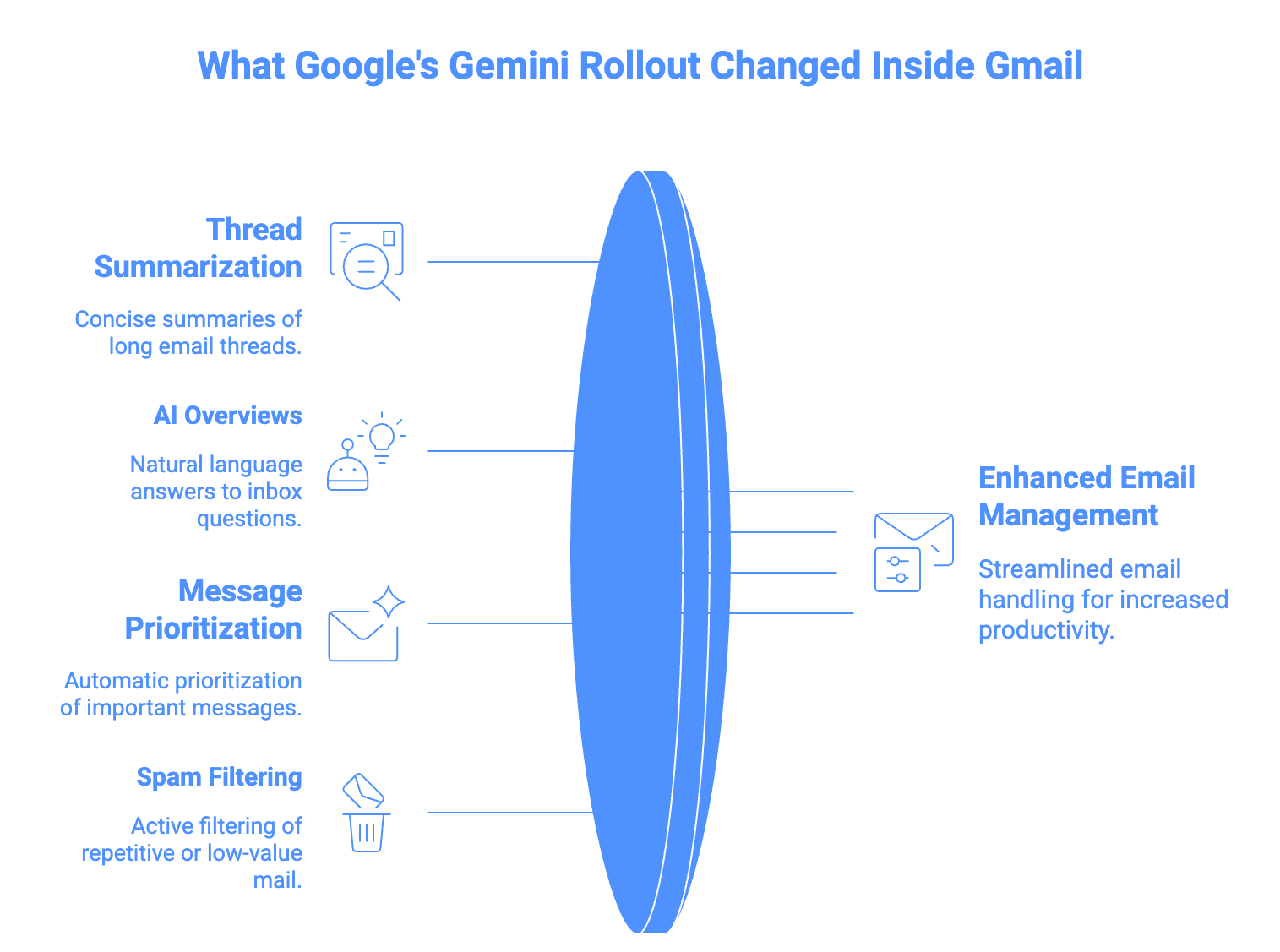
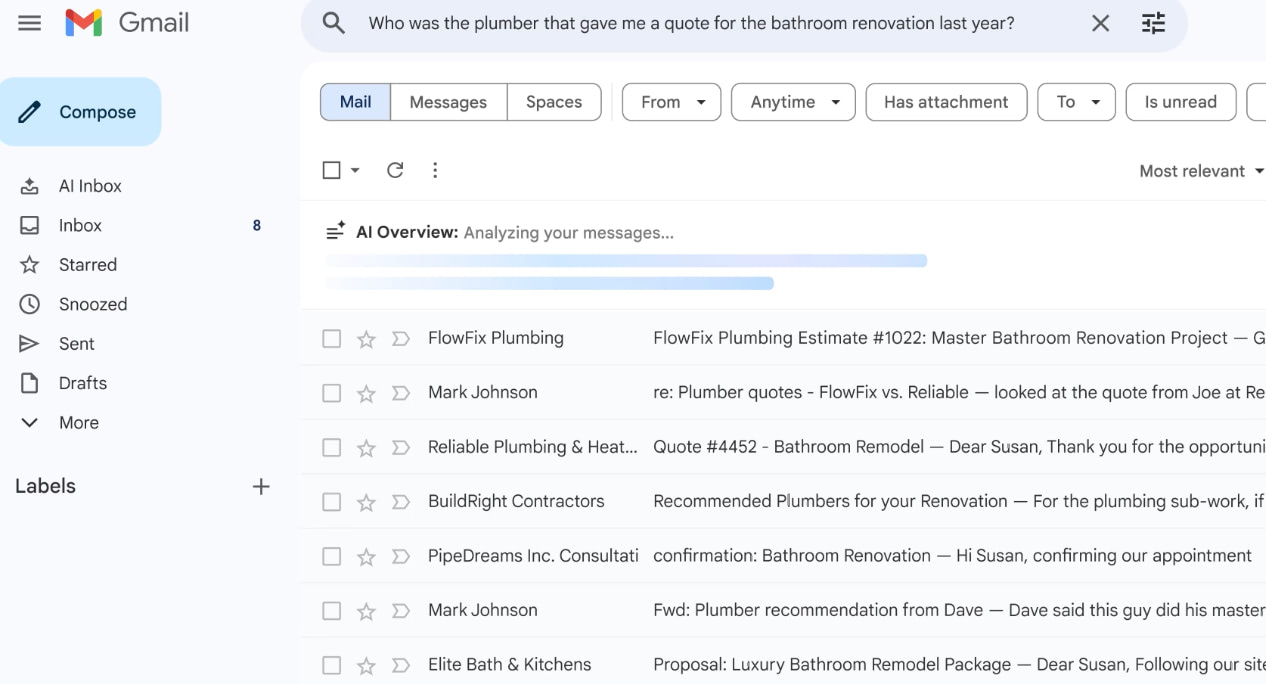
The changes that Google made in Gmail go well beyond spam filtering. Gmail now summarizes long email threads, answers natural language inbox questions through AI Overviews, automatically prioritizes messages from important contacts, and actively filters out what it classifies as repetitive or low-value mail.
The result is an inbox where AI mediates attention before a human ever decides whether to read, click, or reply.
Gmail now filters for visibility, not just deliverability
The most consequential change is that Gmail’s AI acts as a personalized briefing assistant. It reads incoming messages, surfaces priority items, suggests to-do actions, and pushes lower-priority updates out of immediate view.
Messages from VIP contacts get elevated; bulk or repetitive sends get suppressed. Up to 40% of emails that technically reach Gmail inboxes are being deprioritized by AI filtering, which means a clean delivery report can mask a serious visibility problem. Traditional inbox-versus-spam reporting was never designed to capture this kind of silent demotion.
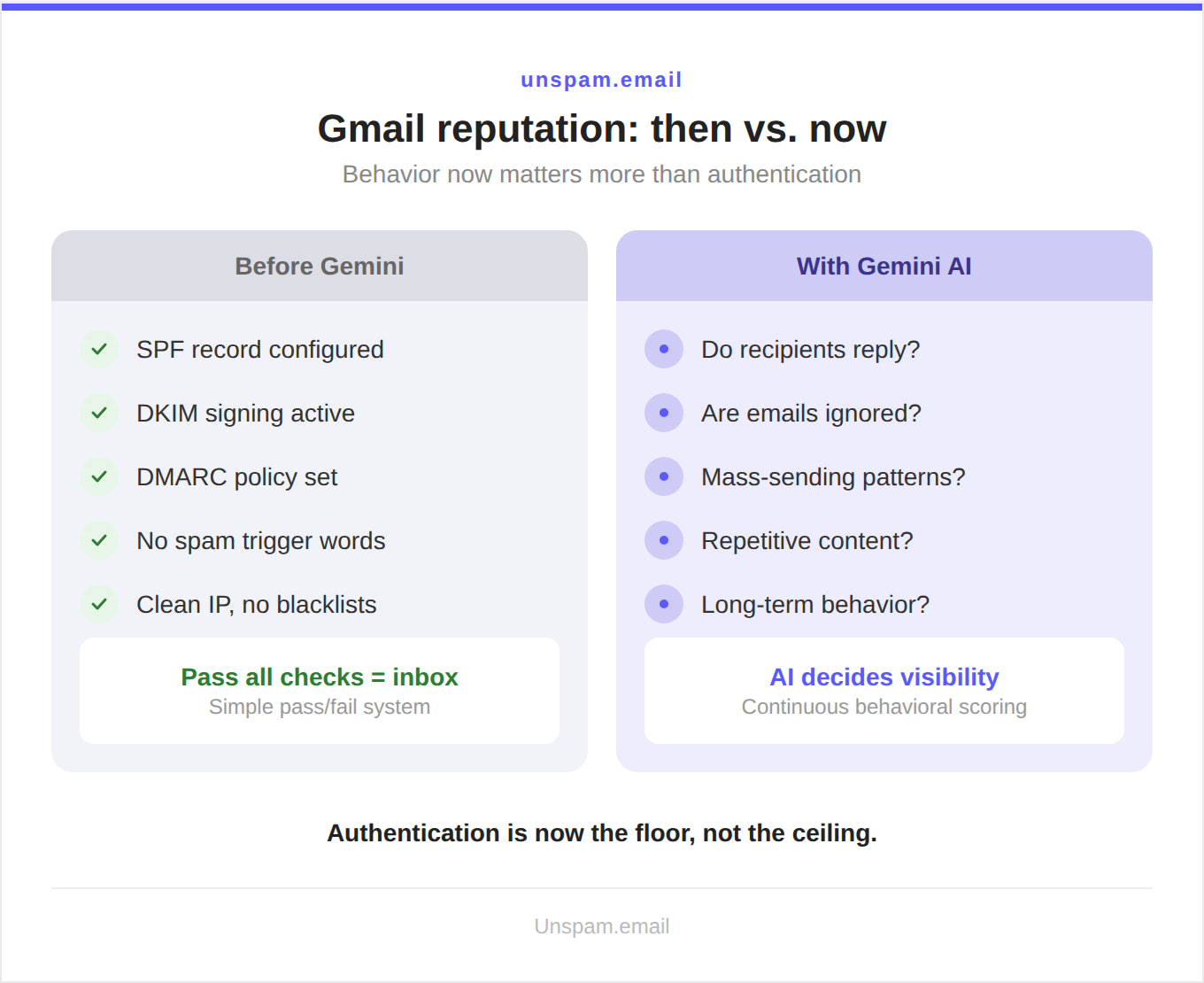
Gemini also evaluates sender behavior over time rather than judging each message in isolation. Gmail learns from whether messages receive replies, whether they are consistently ignored, whether they resemble mass-sending patterns, and whether they are repeatedly sent to the same types of inboxes.
That behavioral layer sits on top of conventional reputation and authentication checks, adding a dimension that no single well-crafted email can override on its own.
What the Engagement Data Actually Shows
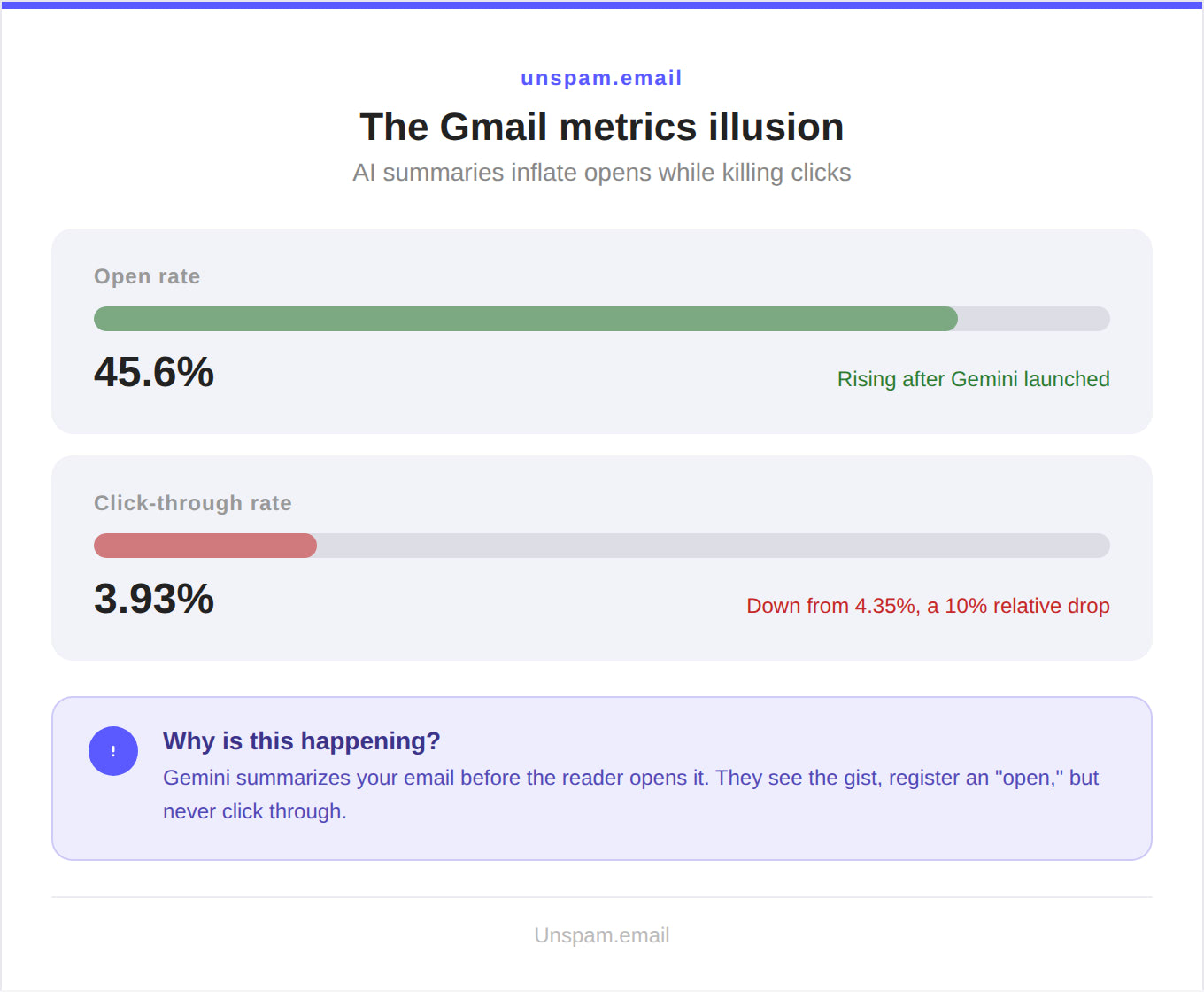
The practical consequences of these changes are already visible in performance metrics. After AI summaries launched inside Gmail, open rates climbed to 45.6% while click-through rates fell from 4.35% to 3.93%.
That divergence is not a coincidence. When Gmail summarizes a thread or surfaces the key point of a message, a user may register an open without ever scrolling through the email body or clicking a link.
The message was technically performed, but the sender’s actual goal went unmet. For senders still measuring success primarily through open rates, Gemini has made that metric significantly less reliable as a proxy for real engagement.
Why Gmail Deliverability Matters More Than Ever in the Age of AI
Getting your email into the inbox used to be the finish line. In 2026, it is barely the starting point.
Gmail now influences visibility inside the inbox
Reaching the inbox and being seen inside it are no longer the same thing. A message can pass every technical check, clear the spam folder, and still be commercially invisible.
For any team whose revenue depends on email-driven action, that gap between delivery and visibility is where real money gets lost.
Sender reputation is now shaped by behavior
Old spam filters looked at surface signals: suspicious words, broken links, and missing authentication records. Gmail’s Gemini-era filtering goes deeper.
According to research on how Gemini evaluates senders, Gmail now learns from whether messages get replies, whether they get ignored, whether they resemble mass-sending behavior, and whether they are repeatedly sent to the same types of inboxes.
A single campaign does not define your standing; your pattern of behavior does. That shift matters because it means poor list quality compounds over time. Sends to invalid addresses, abandoned accounts, recycled inboxes, and spam traps do not just bounce; they generate negative engagement signals that AI systems register and remember.
The metrics are getting harder to read
The engagement data already shows the distortion. If your reporting shows strong open rates but weakening downstream performance, AI summarization may be absorbing the value of your message before the reader ever reaches your call to action.
Understanding why this is happening is the first step. Knowing what to do about it is what separates senders who adapt from those who keep optimizing for a Gmail that no longer exists.
Measuring What Gmail Doesn’t Show You
When Gmail can silently deprioritize a message that passed every authentication check, email deliverability metrics like bounce reports and open rates stop telling the full story.
That gap between what your sending platform reports and what actually happens inside the inbox is exactly where deliverability tools earn their place in a sender’s workflow.
What Email Deliverability Tools Do
Email deliverability tools give senders a view of their campaigns from the receiving end, not the sending end. Before a campaign goes out, you can run it through inbox placement tests that show whether it lands in the primary tab, the promotions folder, or spam across major providers.
You can check your spam score to catch content patterns that trigger filters. You can validate your SPF, DKIM, and DMARC records to confirm authentication is correctly configured. And you can preview how the email renders across different clients and screen sizes, so formatting issues don’t undermine an otherwise solid message.
None of that is visible inside your ESP dashboard. Without a dedicated tool, you’re effectively sending blind.
Why Unspam.email Fits This Environment Specifically
The shift to Gmail using Gemini to summarize, prioritize, and filter based on content quality and sender behavior raises the stakes for every one of those checks. Authentication that was “good enough” before may now be a floor, not a ceiling. Email content that reads as vague or repetitive to a human reader is likely to read the same way to Gmail’s AI.
Unspam.email is built around that reality. Where most tools stop at spam scores and authentication flags, Unspam helps senders understand how their emails look through the lens of AI-driven filtering, surfacing the signals that modern inbox algorithms actually evaluate, not just the technical pass/fail checks that were sufficient five years ago.
That matters when a third of tested email still lands in spam despite widespread authentication adoption. Across the domains we test, 93% publish a valid SPF record and 90% sign with a working DKIM key, yet 52% still have no DMARC policy at all, so the technical floor is largely cleared and visibility, not compliance, is the real problem. In fact, 89% of the messages we check pass a full deliverability check outright, which is exactly why clearing the spam filter no longer tells you whether Gmail's AI will actually surface your email.
If you want to know whether your emails are genuinely inbox-ready for Gmail’s current environment, Unspam.email is a practical place to start.
The Bottom Line
Gmail’s AI filtering has permanently raised the bar for what it takes to reach the inbox. Senders who treat deliverability as an afterthought, relying on outdated tactics or assuming good intentions are enough, will find themselves losing ground to filters that are getting smarter every month.
The senders who win are the ones who treat inbox placement as an ongoing discipline, not a one-time setup task. Every send is an opportunity to build a reputation or erode it, and the margin for error is narrower than it used to be.
If you want to know exactly where you stand before your next campaign goes out, run your emails through Unspam.email and fix problems before Gmail’s filters find them for you.
